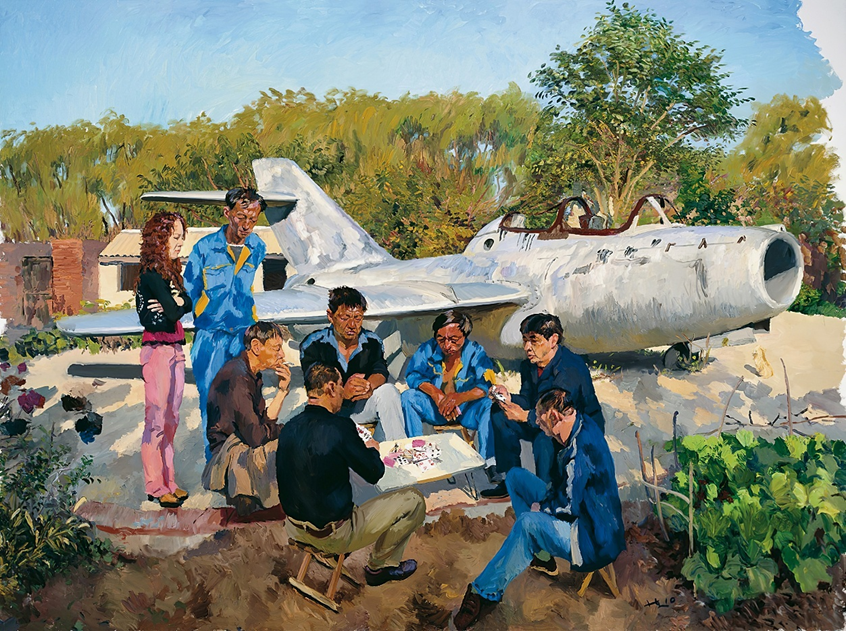
Quantitative Analysis of Spatial Narrative Features in Oil Paintings from the Perspective of Digital Transcription:A Case Study of Xiaodong Liu's Works
Abstract
Against the backdrop of generative AI’s progressive integration into artistic creation, traditional art forms have embraced novel pathways for dissemination and innovative practice. Conventional generative models have been predominantly centered on replicating and learning the technical elements of artworks, such as brushwork and color application. This study aims to propose a novel approach by capturing spatial narrative characteristics, thereby providing quantifiable visual parameters to facilitate the contemporary dissemination of traditional easel oil paintings and AI-assisted creation, and further enabling style-transfer-based artistic production. Taking the oil paintings of artist Liu Xiaodong as the research object, this study adopts a "qualitative-quantitative" mixed research design to deconstruct and quantify his spatial narrative logic, while verifying the feasibility of the proposed analytical framework. Through quantitative analysis of dimensions including "spatial depth," "interpersonal interaction," and "environmental dynamics," a descriptive lexicon adaptable to generative AI comprehension is derived. Following a comparative analysis with affective cognitive assessment, this study validates the feasibility of the quantification system. The translation of artistic experience into descriptive metrics establishes a data foundation and creative resource for subsequent digital transcription practices, such as AI-based style transfer and spatial narrative reconstruction.