Designing a Mobile Museum Exhibition for the Chinese Spring Festival: A Cross-Cultural Communication Perspective
Abstract
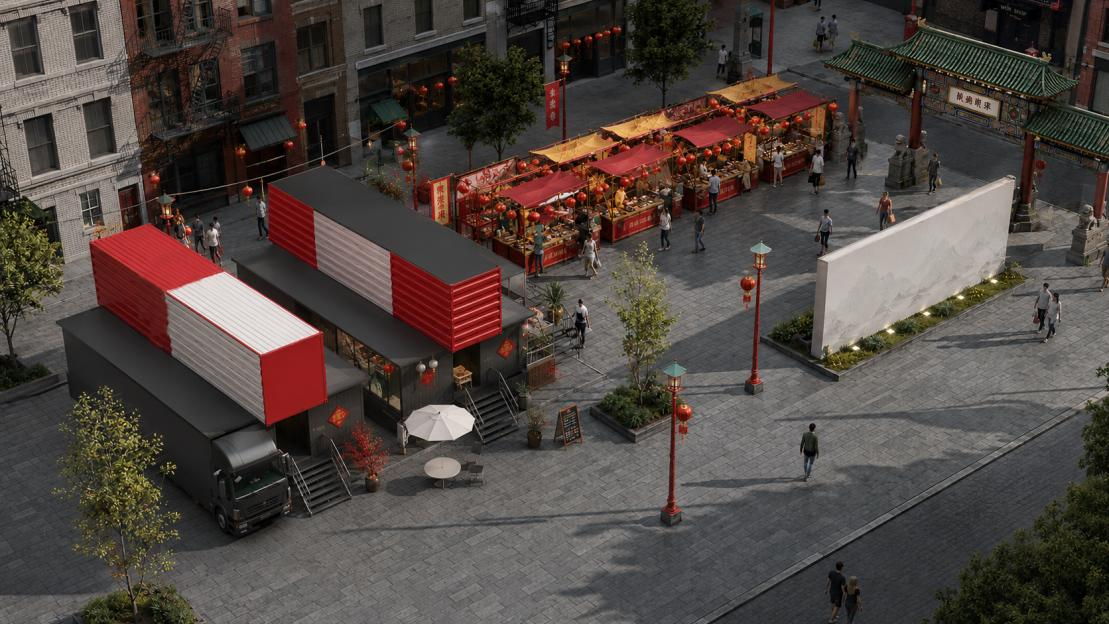
The inscription of the Spring Festival on UNESCO’s Representative List of the Intangible Cultural Heritage of Humanity has brought traditional Chinese festive practices into a broader international heritage discourse. However, overseas presentations of the Spring Festival often emphasize visual symbols and festive atmosphere, while offering limited interpretation of the ritual contexts and social values embedded in these practices. This paper proposes the mobile museum as a supplementary medium for the cross-cultural interpretation of the Spring Festival. Drawing on semiotic theory, it classifies Spring Festival cultural symbols into three levels of cross-cultural accessibility: sensory recognition, contextual interpretation, and value translation. These levels are then translated into a spatial design strategy composed of three corresponding zones: the Perception Zone, the Interpretation Zone, and the Exploration Zone. The proposed design positions the mobile museum as an intermediary between urban festival events and fixed-site museums, extending public access while providing layered cultural interpretation. The study offers a design-oriented pathway from cultural symbol analysis to spatial translation, providing a reference for the cross-cultural exhibition of the Chinese Spring Festival and related forms of intangible cultural heritage.