A Study of Image Composition on Curved Thematic Walls at the Entrances of Cultural Exhibition Halls
Abstract
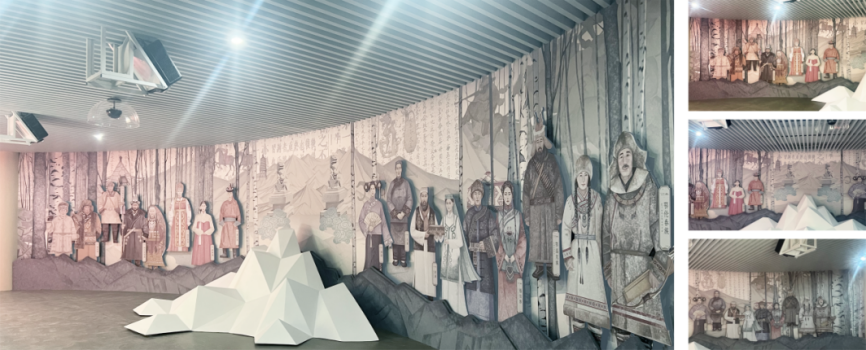
The spatial form of a thematic wall directly influences the narrative impact of an exhibition’s opening, particularly when diverse cultural content spanning multiple settings must be organized. Taking the design of an entrance thematic wall in a cultural exhibition hall as a case study, this paper examines image composition across an elongated curved surface. Beginning with the functional requirements of entrance thematic walls, the study compares straight, angular, enclosing, and curved wall configurations in terms of information presentation, spatial guidance, and thematic integration, and assesses the suitability of the curved configuration for the content and site conditions of this case. It then examines the challenges of viewing while moving and receiving information in segments along a curved wall. Drawing on the sequential viewing mechanism of traditional handscrolls, the paper proposes a design strategy of “establishing the tone—continuous unfolding—central convergence.” This strategy connects different scenes through depictions of the regional environment and brings themes together through a central motif and spatial nodes. The study offers a reference for the design of curved entrance thematic walls in cultural exhibition halls with similar content organization needs and spatial conditions.