A Study on Image Organization in Curved Entrance Theme Walls of Ethnic Museums:A Case Study of the Northeast Ethnic Museum
Abstract
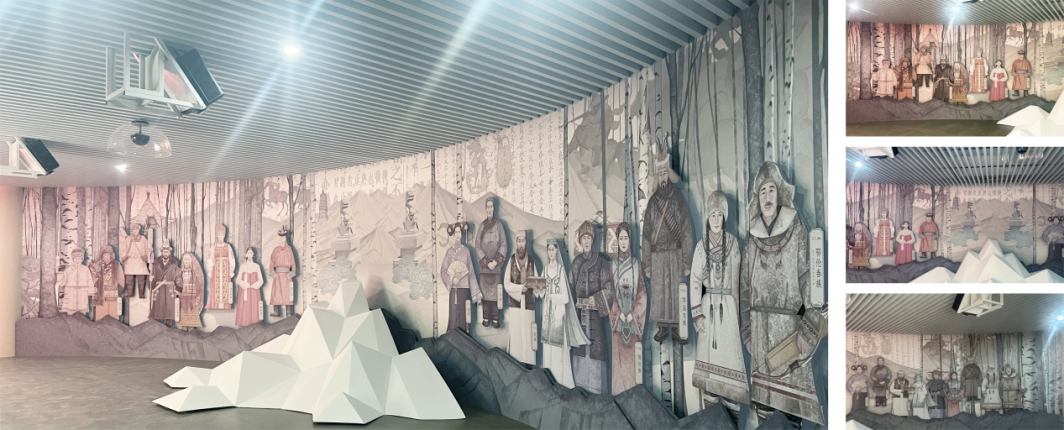
Museum entrance spaces play an important role in indicating exhibition themes,shaping cultural atmosphere, and guiding visitors’ emotional engagement. In response to the juxtaposition of multi-ethnic cultural content, the demand for clear thematic identification, and the construction of entrance spatial experience, the selection of the spatial form of the theme wall directly influences the narrative effect at the beginning of an exhibition. Taking the design practice of the entrance theme wall of the Northeast Ethnic Museum as an example, this paper focuses on the curved theme wall in the introductory entrance space of ethnic museums. Starting from the functional requirements of entrance theme walls, the paper first compares the differences among linear, folded, enclosed, and curved wall forms in terms of information carrying capacity, spatial guidance, and thematic convergence. It argues that the curved long-scale
interface is more suitable for the continuous presentation of multi-ethnic content and the construction of entrance atmosphere. On this basis, the paper further analyzes the problems of mobile viewing and segmented reception brought about by curved wall surfaces. Drawing on the continuous viewing mechanism of traditional handscrolls, it
proposes a design strategy of “establishing the keynote—continuous unfolding—central convergence.” The study suggests that this design strategy helps respond to the narrative expression problems faced by curved long-scale walls, and provides a reference for the narrative design of curved entrance theme walls in ethnic museums and related cultural exhibition spaces.