
Analysis and Path Reconstruction of the "Pseudo-Immersion" Phenomenon in Newly Built Museums
Abstract
In the digital intelligence era, digital exhibition displays have become a standard feature in newly established museums. However, some venues fall into the trap of "overemphasizing hardware while neglecting content transformation," resulting in pseudo-immersive experiences that limit heritage communication effectiveness. This paper aims to analyze the root causes of this phenomenon and explore solutions.
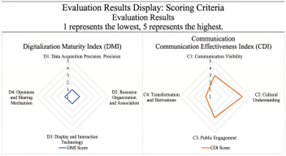
- Using the new Shaoxing Museum as a case study, we developed a dual-dimensional evaluation model encompassing Digitalization Maturity Index (DMI) and Cultural Communication Effectiveness Index (CDI). Through field surveys and audience feedback, we quantitatively assessed digital resource acquisition, interaction mechanisms, and content transformation.
- The results reveal a significant "supply-demand mismatch" in new venues: substantial hardware investments are made, yet shortcomings persist in tacit knowledge visualization, immersive interactions, and asset sharing. This creates a "high-tech infrastructure but low experiential quality" scenario, failing to achieve the transformation into "living cultural resources."
- Propose leveraging AIGC to empower cultural translation, deepen the "Museum+" cross-sector collaboration mechanism, and promote the transformation of digital exhibitions into in-depth knowledge interaction, thereby providing a new paradigm for local cultural heritage preservation.
Downloads
Published
2026-04-15
Issue
Section
Articles

How to Cite
Analysis and Path Reconstruction of the "Pseudo-Immersion" Phenomenon in Newly Built Museums. (2026). Cultural Heritage, 1(2). https://chjournal.org/article/view/660